For many people, going to the movies means more than watching a film.
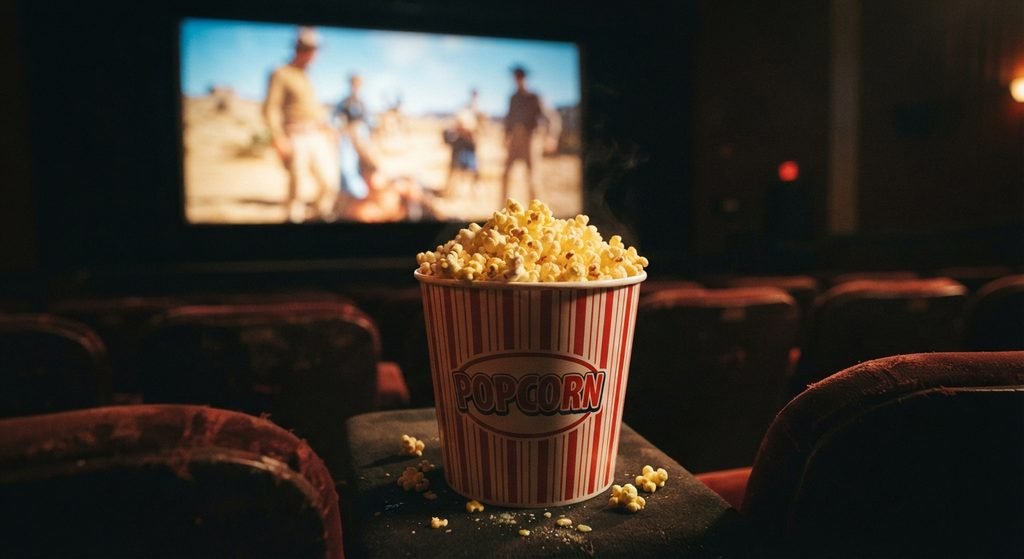
There is the dark theater, the large screen, the sound of the opening credits—and often a familiar box or bucket of popcorn.
Today, popcorn and movies seem inseparable.
But this was not always the case.
Popcorn Was Once an Everyday Snack
Popcorn has a much older history than modern movie theaters.
People in the Americas were popping and eating varieties of corn long before the invention of cinema. Popcorn eventually became a popular snack in the United States because it was inexpensive, easy to prepare, and capable of producing a large volume from a relatively small amount of corn.
Those qualities would later make it perfect for movie audiences.
Early Movie Theaters Had a Different Image
When movie theaters first became popular in the early 20th century, many theater owners wanted their establishments to feel elegant.
Theaters were sometimes designed to resemble sophisticated entertainment venues rather than casual places to eat snacks.
Food was not necessarily considered part of the movie-going experience.
Popcorn vendors, however, had already found another opportunity.
Street Vendors Found Their Audience
Popcorn sellers could operate outside busy entertainment areas and near theaters.
Moviegoers could buy a bag before entering or during their visit.
The smell of freshly popped corn was difficult to ignore, and the low price made it accessible to a wide range of customers.
Theaters eventually recognized that the snack could be more than an outside attraction.
The Great Depression Changed Things
During the Great Depression, consumers became much more price-conscious.
Popcorn was inexpensive compared with many other entertainment purchases, making it an attractive snack for moviegoers.
At the same time, theater owners discovered that popcorn could provide an important additional source of income.
The economics were simple: popcorn was relatively inexpensive to produce and could be sold at a much higher price once prepared and served.
This helped strengthen the relationship between popcorn and cinema.
Popcorn Moved Inside
As theater owners became more comfortable with selling food, popcorn increasingly became part of the theater environment.
Some cinemas began installing popcorn machines inside their buildings.
The distinctive smell became part of the experience.
Eventually, the snack no longer needed to be purchased from a vendor outside. Buying popcorn became part of going to the movies.
Why Popcorn Works So Well in a Theater
Popcorn has several qualities that make it particularly suitable for movies.
It is easy to hold in a container, does not require utensils, can be eaten gradually, and can be shared.
It also has a strong aroma that can fill a room.
Most importantly, it can be produced in large quantities quickly.
For theaters serving hundreds of people, that combination is extremely practical.
The Movie Theater Popcorn Experience Became Its Own Tradition
Over time, popcorn stopped being simply something people happened to eat while watching movies.
It became part of the ritual.
The sound of the popcorn machine, the smell in the lobby, the large striped or branded container, and the first handful eaten before the previews even begin all became recognizable parts of the experience.
The association became so strong that even the smell of popcorn can remind people of a movie theater.
Popcorn Became Part of Movie Culture
The relationship between popcorn and movies eventually became bigger than the theater itself.
Popcorn buckets began appearing in advertising, television, cartoons, and movies.
The food became a visual symbol for cinema.
Today, a bucket of popcorn can communicate “movie night” even without showing a screen or theater.
Final Thoughts
Popcorn did not become a movie theater tradition because it was created specifically for cinema. Its success came from a combination of affordability, convenience, aroma, and timing.
Movie theaters discovered that this humble snack fit their business and their audiences remarkably well.
What began as a simple snack eventually became one of the most recognizable symbols of going to the movies.