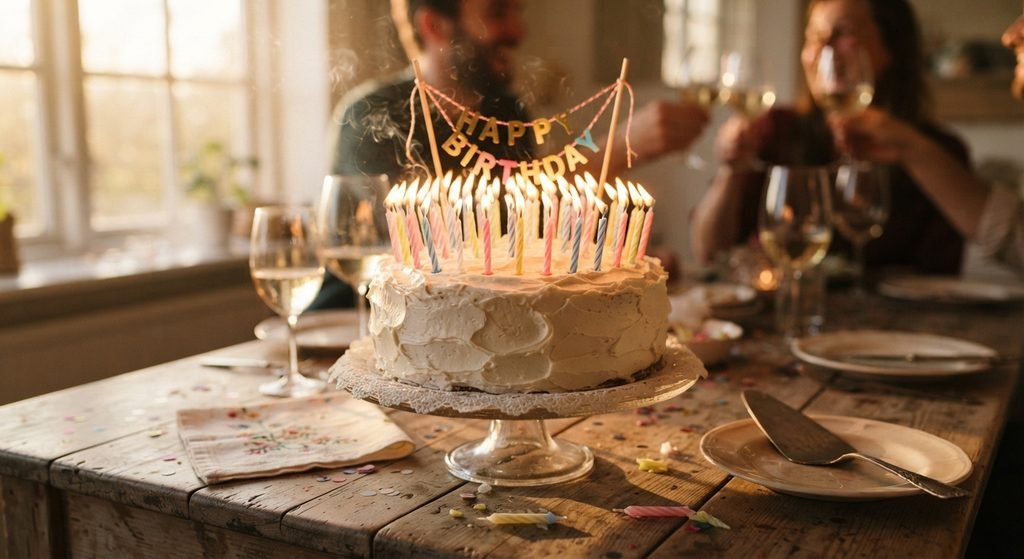
A birthday cake covered with candles is one of the most familiar food traditions in the world.
The routine seems simple: the cake arrives, the candles are lit, everyone sings, and the birthday person makes a wish before blowing them out.
But the tradition developed over centuries, and the modern birthday cake combines several different customs rather than coming from one single ancient ceremony.
Cakes Were Used for Celebrations Long Before Modern Birthdays
Special cakes have been connected with celebrations for thousands of years.
Ancient Greeks are often associated with round cakes offered in connection with Artemis, the goddess of the moon. Some historical accounts connect candles on these cakes with the appearance of moonlight. However, the direct line between these ancient offerings and today’s birthday cake is not firmly established.
The important point is that candles, cakes, religious rituals, and celebrations were already connected in different ways long before the modern birthday party existed.
The German Tradition Changed Everything
A major development came from Germany.
By the 18th century, German celebrations known as Kinderfest included birthday cakes and candles for children. A candle could represent each year of a child’s life, with an additional candle sometimes representing the hope for another year.
The candles could remain lit for much of the celebration before the child eventually blew them out.
This tradition is much closer to the birthday ritual people recognize today.
Why Do We Blow Them Out?
The meaning of blowing out candles has changed over time and is surrounded by several traditions and interpretations.
In the modern birthday ritual, the person celebrating usually makes a silent wish before blowing out the candles.
The idea that the wish should remain unspoken is a later cultural tradition rather than a universal ancient rule.
What is clear is that blowing out the candles became an important part of the birthday ceremony as the German birthday tradition spread and evolved.
Birthdays Became More Widely Celebrated
For much of history, elaborate birthday celebrations were not equally common among all social groups.
Large celebrations could be expensive, and ingredients such as refined sugar were once much less accessible than they are today.
Changes in food production and household economics gradually made cakes more affordable and easier to prepare.
By the 19th and early 20th centuries, birthday cakes were becoming increasingly familiar in middle-class households.
The Industrial Revolution Helped
The growing availability of sugar, flour, baking ingredients, and commercially produced decorations made celebratory cakes easier to create.
Baking also became more accessible as household ovens and commercial bakeries developed.
A birthday cake no longer needed to be an elaborate luxury reserved for wealthy families.
It could become a regular part of family celebrations.
The Candles Became a Visual Tradition
There is also a practical reason candles became so effective as part of the celebration.
They transform a simple cake into a centerpiece.
The flames immediately signal that something special is happening, while the number of candles can represent the person’s age.
That combination of symbolism and visual spectacle helped the tradition survive even as its original meanings changed.
From Ritual to Party Tradition
Modern birthday candles are generally not treated as a religious ritual.
Instead, they have become part of a social celebration.
Families and friends gather around the cake, sing together, make a wish, and share the dessert.
The ritual is simple enough to be repeated across generations while still allowing each family to add its own customs.
Why Cake?
Cake also makes practical sense as a celebration food.
It can be baked in advance, decorated for the occasion, divided among a group, and easily served after the candle ritual.
As cakes became more affordable, they became an especially convenient food for marking important personal occasions.
Final Thoughts
Birthday cakes with candles are the result of several traditions coming together over time. Ancient celebratory cakes, German children’s birthday customs, changing food availability, and modern party culture all contributed to the ritual we recognize today.
What looks like a simple moment at a birthday party is actually the result of centuries of food and cultural history.