A rolling pin may seem like one of the simplest tools in a kitchen, but its shape, material, and weight can affect how easily you roll dough.
Whether you make cookies, pie crusts, pizza, or homemade pastries, choosing a rolling pin that matches the type of baking you do can make the process more comfortable and consistent.
Choose the Right Style
Rolling pins generally come in several basic designs.
A traditional handled rolling pin has handles on both ends and a central barrel that rotates as you roll. This design is familiar and easy to use for many everyday baking tasks.
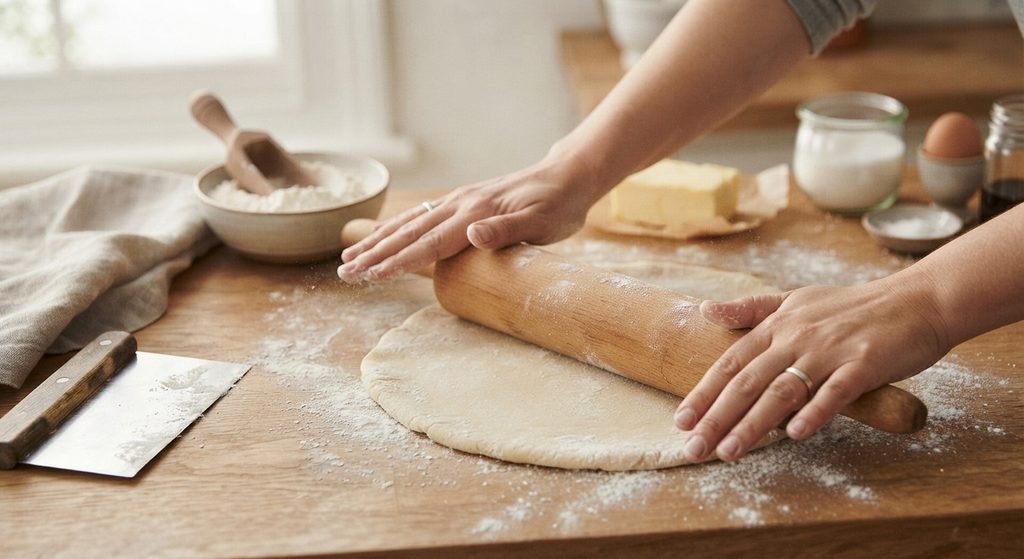
A handle-free rolling pin, sometimes called a straight rolling pin, consists of a single smooth cylinder. It gives your hands more direct control over the pressure applied to the dough.
Neither design is automatically better. The right choice depends on how you prefer to work.
Consider the Material
Wood is one of the most traditional materials for rolling pins.
A wooden rolling pin provides a comfortable grip and enough friction to help control dough. Different types of wood can vary in weight, texture, and durability.
Other rolling pins may be made from materials such as stainless steel, silicone, or marble.
The material affects how the pin feels against the dough and how easy it is to clean.
Think About Weight
Weight can be helpful when working with firm dough.
A heavier rolling pin can apply more pressure with less effort, which may be useful for certain pastry or bread doughs.
A lighter rolling pin gives you more direct control and can be easier to handle when rolling delicate dough.
For general home baking, a moderate weight is usually a practical compromise.
Check the Length
The length of the rolling surface determines how much dough you can flatten in a single pass.
A longer pin can be useful for large pieces of dough, such as pie crusts or pizza dough. A shorter pin may be easier to control when working with smaller portions for cookies or pastries.
Make sure the rolling pin also fits comfortably on the work surface you normally use.
Consider the Surface
The rolling surface should be smooth and free from cracks or rough areas.
A smooth surface helps dough move evenly across the pin and makes cleaning easier.
Wooden rolling pins should be kept dry after cleaning and maintained according to the manufacturer’s instructions. Avoid soaking wooden tools for extended periods because excessive exposure to water can damage the material.
Handles or No Handles?
Handled rolling pins can feel familiar and stable, especially for beginners.
Straight rolling pins allow your hands to sit directly on the barrel, giving you greater control over pressure and movement.
If you frequently make pastry, you may prefer the direct feedback of a handle-free design. For occasional baking, a traditional handled model can be perfectly practical.
Think About the Dough You Make
Your baking habits should guide the decision.
For cookies, a standard wooden rolling pin can handle most tasks. Pie dough may benefit from a comfortable, moderately heavy pin that can spread the dough evenly.
For pizza or bread dough, a longer rolling surface may be useful, although some doughs are better shaped by hand rather than rolled.
There is no need to buy a specialized rolling pin unless your baking routine actually calls for one.
Cleaning and Storage
A rolling pin should be easy to maintain and store.
Most wooden rolling pins can be cleaned with a damp cloth and mild soap when necessary, followed by thorough drying. Always check the care instructions for your specific tool.
Store the rolling pin somewhere dry where it will not be exposed to unnecessary moisture or heat.
Final Thoughts
The best rolling pin is the one that feels comfortable and matches the dough you make most often. Pay attention to material, weight, length, surface, and handle design rather than choosing based only on appearance. A simple, well-made rolling pin can handle a wide range of everyday baking tasks.