A fine-mesh strainer is one of those kitchen tools that can quietly become part of everyday cooking. It can drain small ingredients, strain sauces, rinse grains, sift dry ingredients, and help create smoother textures.
Because strainers come in different sizes and mesh patterns, choosing the right one depends on what you expect to use it for.
What Is a Fine-Mesh Strainer?
A fine-mesh strainer is a kitchen tool made with a tightly woven metal mesh. The small openings allow liquids and very fine particles to pass through while holding back solids.
Unlike a large-holed colander, a fine-mesh strainer is designed for smaller particles and more delicate ingredients.
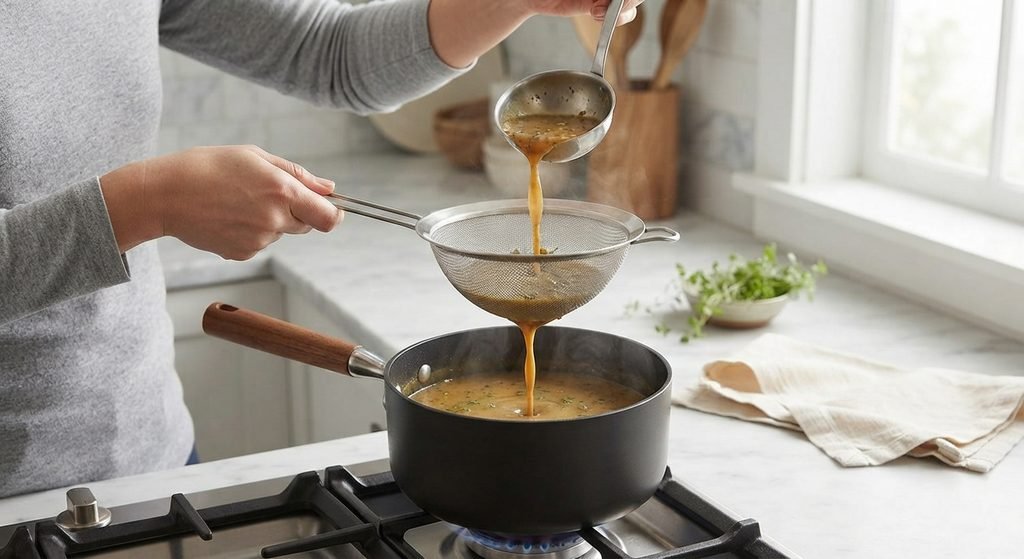
Choose the Right Size
Size is one of the first things to consider.
A small strainer is useful for tasks such as rinsing small amounts of grains, dusting ingredients, or straining small quantities of liquid.
A medium-size strainer is more versatile for sauces, soups, beverages, and general kitchen preparation.
Larger models can handle greater quantities but may require more storage space and a larger bowl or pot underneath.
Consider the Mesh
Not every fine-mesh strainer has exactly the same mesh size.
A very fine mesh is useful when you want to remove tiny particles or create a particularly smooth liquid. A slightly more open mesh can allow food to pass through more easily while still filtering out larger pieces.
If you only want one strainer for general use, choose a versatile fine mesh rather than an extremely specialized model.
Look at the Handle
The handle should feel secure and comfortable in your hand.
A well-designed handle makes it easier to hold the strainer over a bowl or pot without losing control. Some strainers also have a second support hook or resting point that allows them to sit securely over a container.
This can be especially useful when straining liquids.
Check the Frame
The metal frame supports the mesh and helps determine how durable the strainer will be.
A sturdy frame is less likely to bend during regular use, especially when working with heavier ingredients or pressing soft foods through the mesh.
For a tool that you expect to use frequently, a strong frame is worth considering.
Think About Cleaning
Fine mesh can trap small particles, so cleaning should be part of your decision.
Look for a design that is easy to rinse thoroughly and does not have unnecessary joints or areas where food can become trapped.
After washing, allow the strainer to dry completely before storing it.
What Can You Use a Fine-Mesh Strainer For?
A fine-mesh strainer can be useful for:
- Straining sauces and gravies
- Rinsing rice and grains
- Sifting flour and powdered ingredients
- Removing seeds from liquids
- Making smoother soups and sauces
- Straining tea and other beverages
- Dusting powdered sugar or cocoa
- Draining small ingredients
Its versatility is one of the main reasons it deserves a place in a well-equipped kitchen.
Fine-Mesh Strainer vs. Colander
A colander is designed primarily for draining larger quantities of food, such as pasta and vegetables.
A fine-mesh strainer is better when you need to separate very small particles from liquids or work with smaller ingredients.
They serve different purposes, so having both can be useful if you cook frequently.
Final Thoughts
The best fine-mesh strainer is not necessarily the largest or most expensive one. Look for a size that fits your cooking habits, a mesh that suits the tasks you perform most often, a comfortable handle, and a sturdy frame.
A simple, well-made strainer can handle far more kitchen jobs than its size suggests.