A cutting board is one of the most frequently used tools in a kitchen. From chopping vegetables to slicing meat and preparing herbs, it provides the work surface needed for countless everyday tasks.
With so many materials, sizes, and styles available, choosing the right cutting board can be surprisingly difficult. The best option depends on how you cook, how much space you have, and how much maintenance you are willing to handle.
Consider the Material
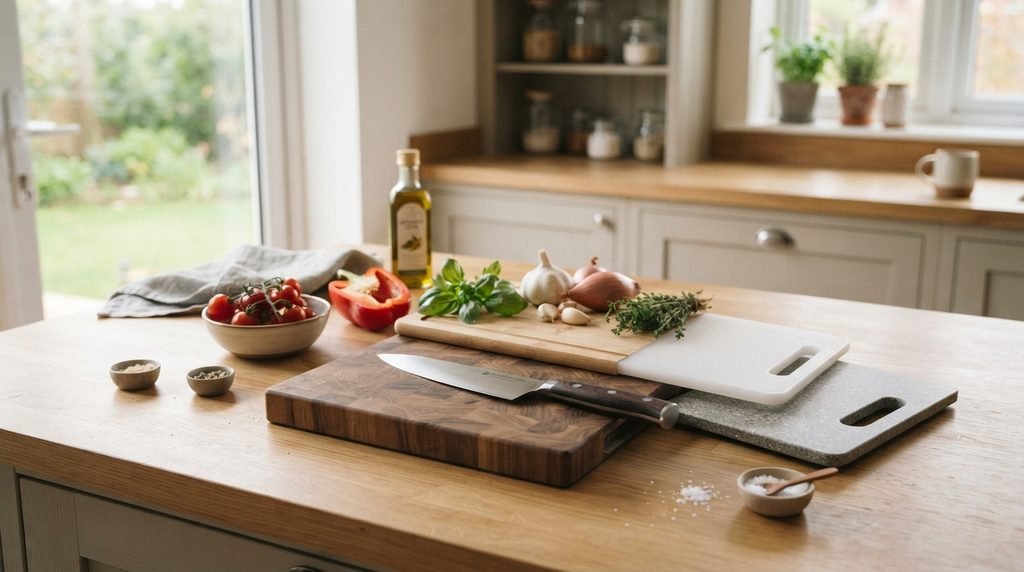
Cutting boards are commonly made from wood, plastic, bamboo, or composite materials. Each has different characteristics.
Wood is popular because it is sturdy, comfortable to use, and gentle on knife edges. A good wooden board can last for years with proper care, although it usually requires more maintenance than plastic.
Plastic boards are lightweight, easy to clean, and available in many sizes. They are particularly convenient for everyday food preparation and can be a practical choice when you want a board that is easy to sanitize.
Bamboo is relatively hard and durable, making it another popular option. However, like wood, bamboo boards should be kept dry and maintained properly to prevent damage over time.
Composite boards are designed to combine durability with relatively simple maintenance. They can be a useful middle ground for cooks who want something sturdy without committing to the care routine of traditional wood.
Choose the Right Size
A cutting board should give you enough room to work comfortably without taking over your entire countertop.
A small board can be convenient for quick tasks such as slicing a lemon or chopping a small amount of herbs. However, a larger board is generally more comfortable when preparing several ingredients at once.
If you have enough counter space, choosing a larger primary cutting board can make food preparation feel much less cramped.
Think About Thickness
Thickness affects stability and durability.
A thicker board tends to feel more solid while cutting and is less likely to move around on the countertop. Thinner boards are usually lighter and easier to store, making them useful when kitchen space is limited.
For a main everyday cutting board, a stable design that does not flex easily is usually the better choice.
Pay Attention to Stability
A cutting board that slides while you are chopping can make food preparation frustrating and potentially unsafe.
Look for a board with enough weight to remain stable or one with a non-slip base. If your preferred board does not have a non-slip surface, placing a slightly damp kitchen towel underneath it can help keep it in place.
Consider How You Clean It
Cleaning requirements vary depending on the material.
Plastic boards are generally simple to wash and are convenient for frequent food preparation. Wooden and bamboo boards usually require more careful handling and should not be left soaking in water.
Regardless of the material, clean the board promptly after use and allow it to dry completely before storing it.
Think About Separate Boards
Using more than one cutting board can make kitchen organization easier.
For example, you may prefer one board primarily for produce and another for raw meat or poultry. Keeping separate boards can help you organize food preparation and reduce the chance of transferring unwanted residue between ingredients.
If you use multiple boards, choosing different sizes or colors can make it easier to tell them apart.
Don’t Forget Storage
A large cutting board is useful, but it should also have a practical place to live when you are not using it.
Before buying one, consider whether it can fit comfortably inside a cabinet, stand vertically against a wall, or be stored in another convenient location.
A board that is difficult to store may end up being used less often, even if it is excellent for cooking.
Final Thoughts
The best cutting board is not necessarily the most expensive one. It should be stable, large enough for your typical cooking tasks, comfortable to use, and practical to clean and store.
For many home cooks, having one reliable everyday board and a separate board for raw meat and poultry can provide a simple and practical setup without filling the kitchen with unnecessary equipment.