Mushrooms are often treated differently from other vegetables when it comes to washing. Some cooks wipe them clean with a towel, while others rinse them under running water. The common concern is that mushrooms absorb too much water and become soggy when cooked.
But does washing mushrooms really make that much of a difference?
We put the idea to the test.
The Test
To make the comparison fair, use mushrooms of similar size and condition and divide them into two groups.
- Group A: mushrooms cleaned with a dry paper towel or soft brush
- Group B: mushrooms quickly rinsed under cold running water and then dried thoroughly
Cook both groups in the same skillet, using the same amount of oil and the same heat.
The goal is to observe how much water the mushrooms release, how quickly they brown, and how their texture compares.
What Happens When Mushrooms Get Wet?
Mushrooms can hold some water, but they are not simply little sponges that immediately fill with water when rinsed.
A quick rinse does not necessarily make mushrooms waterlogged. The bigger issue is how much water remains on their surface when they go into the pan.
If mushrooms are heavily soaked and added to a crowded skillet, the excess water can contribute to steaming. That can delay browning and leave the mushrooms softer for longer.
A quick rinse followed by thorough drying is a very different situation.
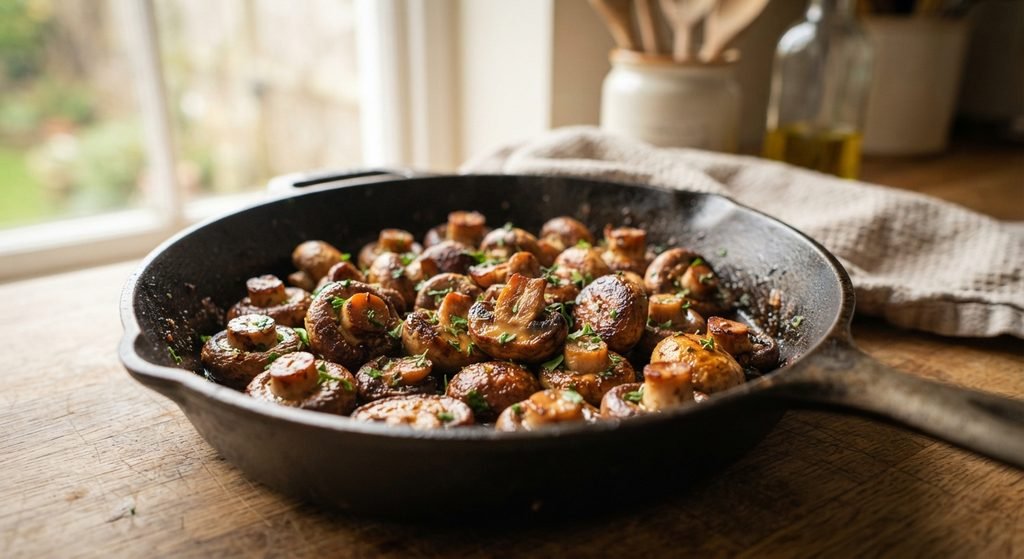
Why Do Mushrooms Release So Much Water?
Fresh mushrooms naturally contain a large amount of water.
As they heat up, that water begins to leave the mushrooms and collect in the pan. This is one reason mushrooms can appear to stop browning during the early stages of cooking.
If the pan is crowded, the released moisture has less opportunity to evaporate quickly. The mushrooms can then simmer in their own liquid instead of developing a deeply browned surface.
This effect is usually much more important than whether the mushrooms were briefly rinsed beforehand.
Does Wiping Them Actually Make Them Brown Faster?
It can help, but the difference is often smaller than people expect.
Mushrooms that are wiped clean start with less surface moisture. Rinsed mushrooms can perform similarly if they are dried well before cooking.
The bigger factors are usually:
- How crowded the pan is
- How hot the pan is
- How much oil is used
- How wet the mushrooms are when they enter the pan
- Whether the mushrooms are left undisturbed long enough to brown
In other words, pan conditions can matter more than the cleaning method itself.
Our Conclusion
A quick rinse does not automatically make mushrooms soggy.
The important part is what happens afterward. If mushrooms are rinsed briefly and dried well, they can still brown beautifully in a hot, uncrowded pan.
On the other hand, soaking mushrooms or putting visibly wet mushrooms into an overcrowded skillet can make browning more difficult.
So, if mushrooms are particularly dirty, a quick rinse is perfectly reasonable. Dry them thoroughly, heat the pan properly, and give them enough space to cook.
The real kitchen lesson is simple: surface moisture matters, but washing itself is not the main enemy of crispy, browned mushrooms.
Final Thoughts
The idea that mushrooms should never touch water is more complicated than it sounds. A brief rinse followed by good drying can work just as well as careful wiping, especially when the cooking technique is right.
If you want deeply browned mushrooms, focus less on avoiding water at all costs and more on drying the mushrooms, heating the pan, and avoiding overcrowding.