Does salting scrambled eggs before cooking make them tough? It is a common kitchen belief, but a simple side-by-side test can reveal whether the timing of the salt actually makes a noticeable difference.
The Test
Prepare two identical portions of beaten eggs.
Season one portion with salt immediately before cooking. Season the second portion with the same amount of salt several minutes before cooking.
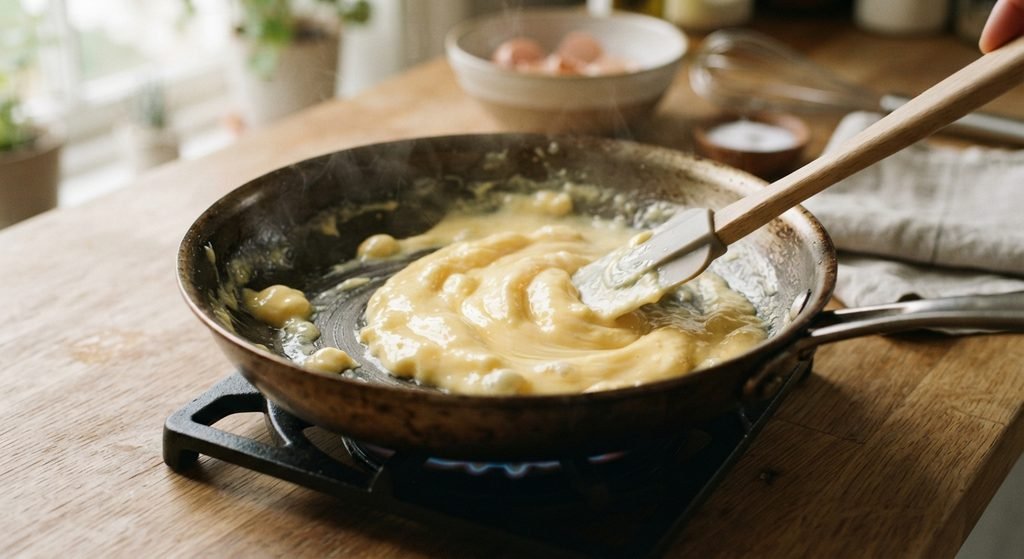
Cook both portions in identical pans over the same low to medium-low heat. Use the same amount of butter and cook them until just set.
Then compare their moisture, tenderness, and overall texture.
What Happens When Salt Meets Eggs?
Eggs contain proteins that change structure as they are heated.
Salt can influence how those proteins behave during cooking. Rather than simply making the proteins tougher, salt can help moderate how tightly they interact as the eggs set.
This means the idea that salt automatically makes scrambled eggs rubbery is too simple.
What About Early Salting?
When salt is mixed into beaten eggs before cooking, it has time to distribute throughout the mixture.
The important factor is not simply whether the salt was added early or late. Cooking temperature and timing have a much larger influence on the final texture.
Eggs cooked aggressively over high heat can become dry and firm regardless of when they were salted.
The Heat Test
The easiest way to see this is to perform a second comparison.
Cook one batch gently over low heat and another over higher heat. Keep the salt timing identical.
The difference between the two batches should be much more noticeable than the difference caused by salting a few minutes earlier or later.
Gentle cooking gives the egg proteins more time to set without forcing out as much moisture.
Texture Matters
Perfect scrambled eggs should be soft, moist, and tender rather than dry or rubbery.
Removing the eggs from the heat while they still look slightly moist can also help because residual heat continues cooking them after they leave the pan.
This makes heat control one of the most important variables in the experiment.
Does the Salt Timing Really Matter?
For everyday scrambled eggs, salting before cooking does not automatically make them tough.
In fact, allowing the salt to mix into the eggs before they hit the pan can produce evenly seasoned eggs and can work well with gentle cooking.
The bigger mistake is usually overcooking.
The Practical Result
If you prefer to season your scrambled eggs before cooking, there is little reason to avoid doing so because of the idea that salt will make them rubbery.
Use moderate heat, stir gently, and remove the eggs from the pan before they become completely dry.
Final Thoughts
Salting scrambled eggs before cooking is not the problem many cooks believe it is. The experiment shows that cooking temperature and timing have a much greater effect on tenderness. For softer scrambled eggs, focus on gentle heat and avoid cooking them beyond the point where they are just set.