Fresh pasta dough can sometimes feel surprisingly difficult to work with.
You roll it, stretch it, and it seems to fight back. Leave it alone for a while, however, and the same dough may suddenly become much easier to shape.
So what is happening?
Does resting pasta dough actually make a difference?
The Test
Prepare one batch of fresh pasta dough using a consistent recipe.
Divide the dough into three equal portions.
Roll the first portion immediately after kneading.
Let the second portion rest for 15 minutes before rolling.
Allow the third portion to rest for 30 minutes before rolling.
Keep the dough covered during the resting periods so the surface does not dry out.
Then compare how each portion behaves.
Why Dough Resists Stretching
The key is gluten.
When flour is mixed with liquid and worked, proteins in the flour begin forming a gluten network.
Kneading strengthens that network.
A strong gluten structure gives dough elasticity, which is useful for pasta but can also make freshly kneaded dough resistant to stretching.
That resistance is what cooks often describe as dough “springing back.”
What Happens Immediately After Kneading?
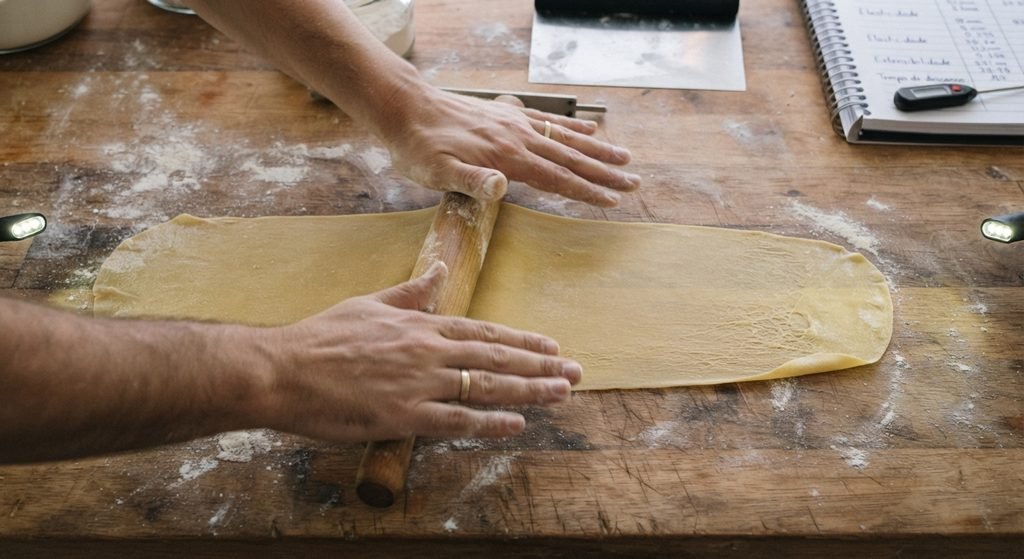
Freshly kneaded pasta dough can be relatively tight and elastic.
When you try to roll it immediately, it may contract after being stretched.
You may roll the dough thinner, only to watch it partially return toward its original shape.
This can make the process frustrating.
What Happens During Resting?
Resting gives the dough time to relax.
The gluten network does not disappear, but the tension created during kneading can decrease.
As a result, the dough can become easier to roll and shape.
This is particularly noticeable when working with dough that has been kneaded thoroughly.
Fifteen Minutes vs. Thirty Minutes
The difference between a short and longer rest can be interesting.
After 15 minutes, the dough may already feel noticeably more cooperative.
After 30 minutes, it may stretch more easily and require less force to reach the desired thickness.
However, the exact result depends on the flour, hydration, kneading method, temperature, and thickness of the dough.
There is no single resting time that works identically in every kitchen.
What If You Skip the Rest?
Skipping the resting stage does not make pasta impossible.
You can still roll and cut the dough.
The problem is that you may need to apply more pressure, and the dough may keep contracting as you work.
This can make it harder to achieve an even thickness.
Instead of fighting the dough, allowing it to rest can make the process more efficient.
A Simple Extension of the Experiment
Try another comparison.
Take one piece of dough and knead it for only a short time. Knead another piece more thoroughly.
Rest both for the same amount of time.
Then compare how they roll.
This helps demonstrate that resting is only one factor affecting dough elasticity.
The amount of kneading matters too.
Temperature Can Also Matter
Pasta dough behaves differently depending on its temperature.
A cooler dough can feel firmer, while a warmer dough may become more flexible.
This is another reason why two cooks can follow the same recipe and experience slightly different dough behavior.
For a useful experiment, keep the dough portions at the same temperature before rolling.
The Practical Result
Resting pasta dough is not just a traditional instruction included in recipes without purpose.
It changes how the dough behaves.
A short rest can make the dough less resistant to rolling and can make it easier to achieve an even sheet.
Final Thoughts
Fresh pasta dough often becomes easier to roll after resting because the gluten network has time to relax after kneading.
If your pasta dough keeps shrinking back while you roll it, the simplest solution may not be more flour or more force. Give it some time to rest, then try again.
Sometimes the best way to work with dough is simply to stop working with it for a while.