Does preheating your pan really improve browning? The simple answer is yes, but the difference becomes clearer when you understand what happens when cold food meets a cold or properly heated cooking surface.
The Test
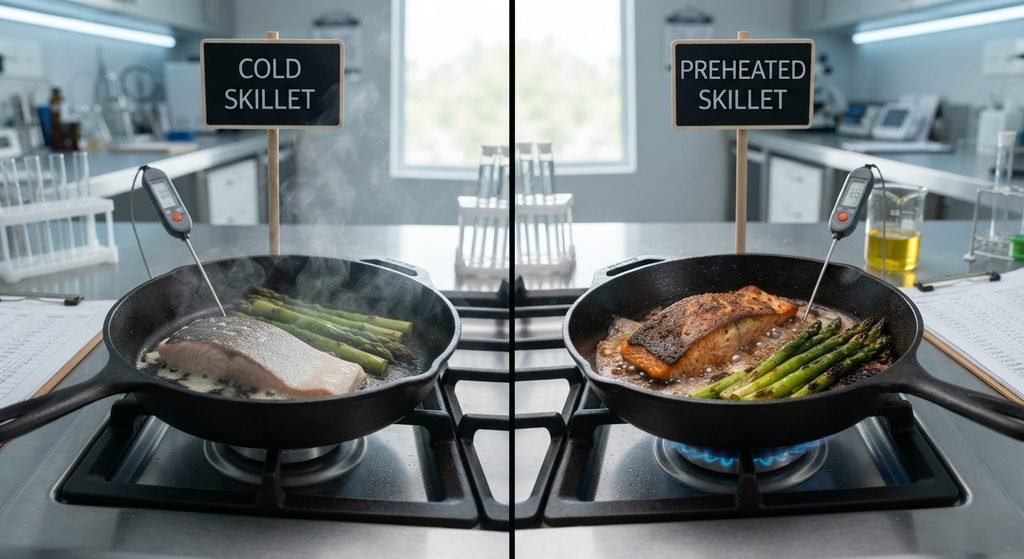
For a simple comparison, prepare two identical pieces of chicken or two batches of vegetables.
Place one portion into a skillet before it has fully heated. For the second portion, allow the skillet to preheat properly before adding the food.
Use the same amount of oil, the same heat setting, and the same cooking time whenever possible.
Then compare the color, texture, and amount of moisture released.
What Happens When Food Hits a Cold Pan?
Food contains water, and water has to evaporate before the surface can become hot enough for strong browning.
When food is placed into a cold pan, the pan must first heat up while the food begins releasing moisture.
This can extend the period during which the surface remains relatively cool and moist.
Why Does a Hot Pan Help?
A properly preheated pan already has enough stored heat to transfer energy quickly to the food.
As surface moisture evaporates, the temperature of the food’s exterior can rise enough for browning reactions to become much more active.
This is particularly important when cooking foods such as steak, chicken, mushrooms, and vegetables.
Browning and Moisture
One of the biggest differences is the amount of moisture present on the cooking surface.
If the pan is not hot enough, food may release water faster than it can evaporate. Instead of developing a strong sear, the food can begin to steam.
A sufficiently hot pan helps the moisture evaporate more efficiently, allowing the surface to develop better color.
Can the Pan Be Too Hot?
Absolutely.
Preheating does not mean heating the pan as much as possible.
Excessive heat can burn oil, scorch seasonings, and brown the outside of food before the inside is properly cooked.
The ideal temperature depends on the ingredient and cooking method.
Does the Type of Pan Matter?
Yes.
Different materials heat and respond to temperature changes differently. Cast iron, for example, stores a substantial amount of heat and can provide strong heat retention.
Stainless steel also works very well for browning when properly preheated.
Nonstick pans generally require more moderate heat and should be used according to the manufacturer’s recommendations.
What the Test Shows
The properly preheated pan should generally produce stronger browning and a better-developed exterior.
The cold-pan batch may still cook successfully, but it can take longer to develop color and may release more moisture before browning begins.
The difference is especially noticeable with ingredients that contain a lot of water.
A Simple Kitchen Habit
Instead of adding food immediately after turning on the burner, give the pan time to heat.
Add the appropriate amount of cooking oil when needed, then add the food once the pan has reached a suitable cooking temperature.
Avoid overcrowding the pan, because too much food can lower the temperature and create the same steaming problem.
Final Thoughts
Preheating your pan is a simple step that can significantly improve browning. A properly heated cooking surface helps moisture evaporate and gives food a better opportunity to develop a flavorful, golden exterior. The key is controlled heat rather than maximum heat.