Does adding more baking powder really make pancakes fluffier? It sounds logical: if baking powder helps pancakes rise, adding more should make them even lighter. But baking has a point where more leavening stops being helpful.
The Test
Prepare three small batches of pancake batter using the same recipe.
Use the recommended amount of baking powder in the first batch. Use slightly less in the second and slightly more in the third.
Keep everything else exactly the same, including the flour, milk, eggs, mixing method, pan temperature, and cooking time.
Compare the height, texture, color, and flavor of the finished pancakes.
What Baking Powder Does
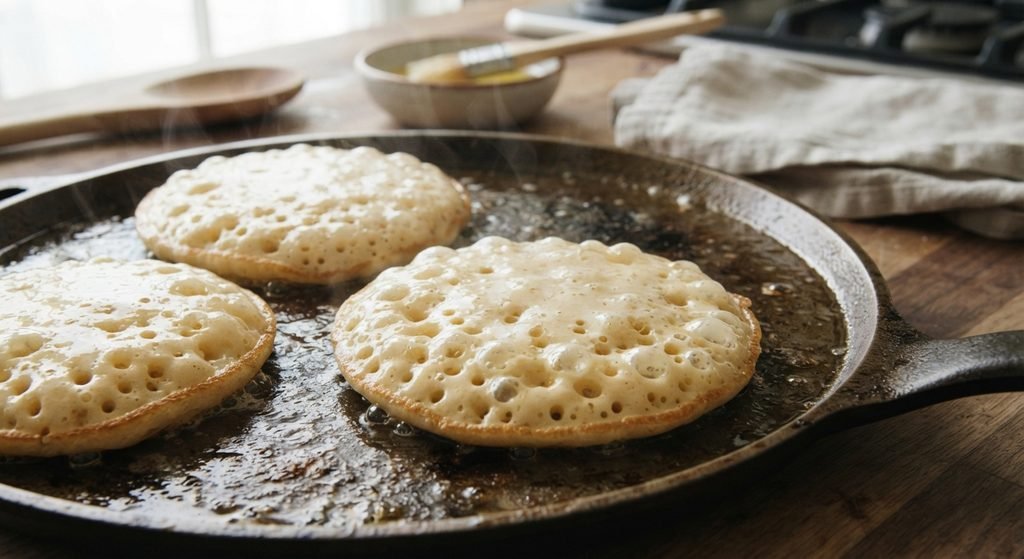
Baking powder is a leavening agent. When it becomes active in the batter, it produces carbon dioxide gas.
Those gas bubbles become trapped within the developing structure of the pancake as it cooks.
The result is a lighter texture and more height.
Why More Is Not Always Better
A pancake can only hold so much gas.
If the batter produces more gas than its structure can support, the bubbles can become too large or escape before the pancake has finished setting.
Instead of becoming dramatically fluffier, the pancake may rise quickly and then collapse.
The extra baking powder can also affect the flavor.
What Happens With Too Little?
The batch with too little baking powder should generally produce a denser pancake.
It may spread more across the pan and have a flatter appearance.
The interior can still be tender, but it will not have the same light structure as a properly leavened pancake.
What Happens With the Correct Amount?
The properly balanced batch should rise steadily as it cooks.
The interior should contain small, evenly distributed air pockets, giving the pancake a soft and light texture without making it fragile.
This balance is why recipes specify a particular amount rather than simply saying to add as much baking powder as possible.
Mixing Matters Too
Baking powder is not the only factor controlling pancake texture.
Overmixing the batter can develop more gluten, making the finished pancakes tougher and less tender.
A few small lumps in pancake batter are generally less problematic than aggressively mixing until the batter is completely smooth.
This means you can have the right amount of baking powder and still get poor results if the batter is handled incorrectly.
Pan Temperature Matters
The cooking surface also affects how the batter rises.
If the pan is too cool, the pancakes may spread and cook slowly.
If it is too hot, the exterior can brown before the center has finished setting.
A moderate, consistent temperature gives the batter time to expand and the interior time to cook.
The Practical Result
The experiment shows that more baking powder is not a shortcut to endlessly fluffier pancakes.
The best result comes from balancing the amount of leavening with the rest of the recipe and the cooking method.
Small changes can affect the final texture, but increasing the amount dramatically can create new problems rather than solving them.
Final Thoughts
Baking powder is important for fluffy pancakes, but more is not necessarily better. The ideal amount creates enough gas to lift the batter while the pancake structure develops around it. For consistently light pancakes, balance matters more than simply adding extra leavening.