One of the most common pieces of cooking advice is to take a steak out of the refrigerator before cooking it.
The idea sounds simple: if the meat starts closer to room temperature, it should cook more evenly from edge to center.
But does letting a steak sit out actually make a meaningful difference?
The Test
Take two steaks of similar size and thickness.
Keep one refrigerated until shortly before cooking.
Remove the other from the refrigerator and let it sit for a limited period before cooking.
Season both steaks in exactly the same way.
Use the same pan, cooking temperature, amount of oil, and cooking time for both.
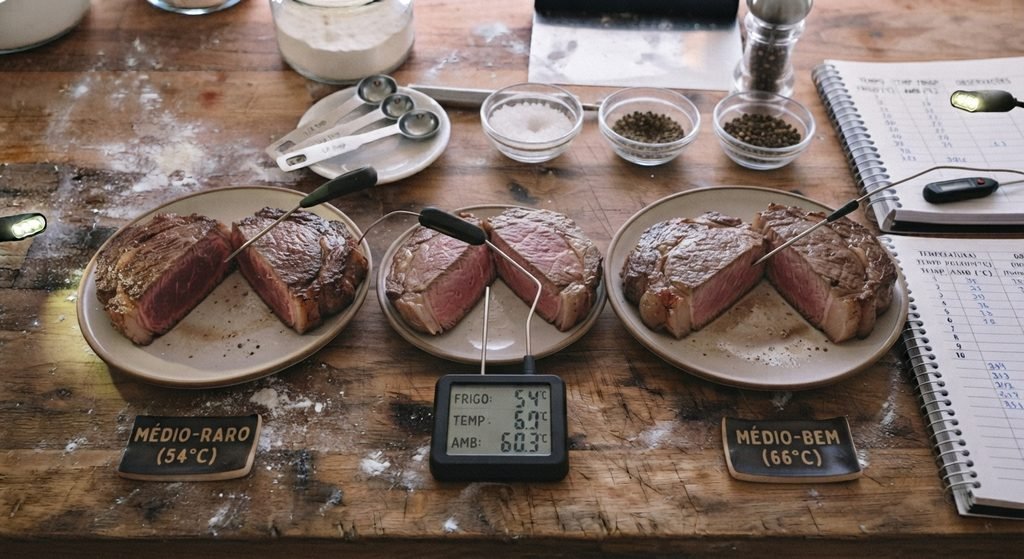
Then compare the internal temperature and doneness from the outside toward the center.
What Happens Inside a Cold Steak?
A refrigerated steak has a significant temperature difference between its surface and center.
When it hits a hot pan, the outside heats rapidly while the center remains much colder.
This temperature difference can affect how quickly the steak reaches the desired internal doneness.
The exterior may develop a browned crust while the center is still relatively cool.
What Happens When the Steak Rests Before Cooking?
Allowing the steak to warm slightly reduces the temperature difference between the surface and center.
However, a steak does not instantly become room temperature simply because it has been sitting on the counter for a short time.
The center warms considerably more slowly than the surface.
This means the effect can be smaller than many cooking tips suggest.
Does It Really Create Even Cooking?
It can help somewhat, but it is not the only factor that determines even cooking.
The thickness of the steak, starting temperature, pan temperature, cooking method, and desired doneness all have major effects.
A very thick steak will still have a substantial temperature gradient even after spending some time outside the refrigerator.
The Pan Matters More Than You Might Expect
A properly heated cooking surface can make a major difference.
If the pan is not hot enough, the steak may spend too long cooking before developing a good crust.
If the pan is excessively hot, the exterior can brown very quickly while the center remains undercooked.
The goal is to create enough surface heat for browning while controlling the overall cooking process.
What About a Very Cold Steak?
Starting with a very cold steak can make the center take longer to reach the desired temperature.
This may encourage the cook to leave the steak in the pan longer.
The longer cooking time can increase the amount of heat reaching the interior, potentially affecting the contrast between the crust and center.
But this does not mean the steak will automatically be poorly cooked.
Temperature control is still the key variable.
A More Interesting Experiment
For a more controlled Food Lab test, compare three steaks:
- Straight from the refrigerator
- Rested briefly before cooking
- Allowed to warm for a longer period
Use identical steaks and the same cooking method.
Measure the internal temperature before cooking, during cooking, and after resting.
Then slice each steak through the center and compare the doneness from edge to middle.
This gives you a much clearer picture than judging the outside alone.
Resting After Cooking Is Different
There is another type of resting that should not be confused with letting raw meat sit before cooking.
After cooking, allowing a steak to rest gives its internal temperature time to stabilize while the meat’s juices redistribute.
This is a separate step with a different purpose.
Safety Still Comes First
Raw meat should not be left at room temperature for extended periods.
The purpose of a short pre-cooking rest is not to leave meat sitting out indefinitely.
For food safety, handle raw meat carefully and follow appropriate temperature and storage guidance.
The Practical Result
Letting a steak sit briefly before cooking can reduce the temperature difference between the exterior and center, but it is not a guaranteed shortcut to perfectly even cooking.
The steak’s thickness, cooking temperature, and method are equally important.
If you want greater control, using an instant-read thermometer is far more reliable than guessing based only on how long the steak has been sitting out.
Final Thoughts
The idea that steak must reach room temperature before cooking is often presented as an absolute rule, but the reality is more nuanced.
A short rest can warm the surface and slightly reduce the temperature gap, but the center of a thick steak remains much colder for longer.
Good temperature control, appropriate cooking technique, and checking the internal temperature are more dependable ways to achieve the doneness you want.