Adding salt to pasta water is one of the most familiar instructions in cooking. Some cooks add a generous amount, while others use only a small pinch or skip it entirely.
But does the salt actually make a noticeable difference?
A simple kitchen experiment can help answer the question.
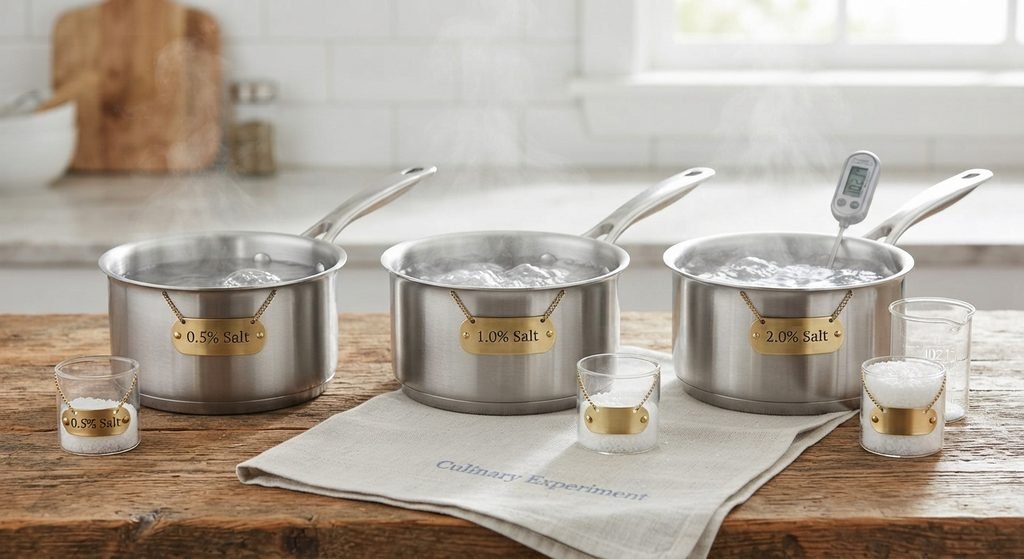
The Test
Prepare three pots of water using the same amount of water.
For the first pot, add no salt.
For the second, add a small amount of salt.
For the third, add a larger amount of salt.
Bring all three pots to the same temperature before adding identical portions of pasta.
Cook the pasta for the same amount of time, then compare the samples.
What Does Salt Actually Do?
The main purpose of salting pasta water is flavor.
As the pasta cooks, it absorbs water. If that water contains salt, some of that seasoning becomes part of the pasta itself.
This is different from simply adding salt to the sauce later.
Seasoning the cooking water allows the pasta to develop flavor from the inside rather than relying entirely on the finished sauce.
The Unsalted Sample
Pasta cooked in plain water can taste noticeably flat, especially when eaten by itself.
A flavorful sauce can cover some of that difference, but the pasta itself contributes very little seasoning.
This makes the contrast easier to notice when tasting the cooked noodles without sauce.
The Lightly Salted Sample
A moderate amount of salt produces a more seasoned flavor without making the pasta taste aggressively salty.
This is often the most practical approach for everyday cooking because the pasta gains some flavor while still leaving room for the sauce and other ingredients.
The Heavily Salted Sample
Adding substantially more salt creates a stronger difference.
The pasta can become noticeably salty, particularly if it is served with a sauce that is already highly seasoned.
This demonstrates an important point: more salt does not automatically mean better pasta.
The goal is balanced seasoning.
Does Salt Change the Texture?
Salt can have some effects on the behavior of pasta and the cooking water, but for normal home cooking, the most noticeable reason to salt pasta water is flavor rather than a dramatic texture transformation.
Factors such as the pasta itself, cooking time, water temperature, and the amount of water generally have a much greater practical influence on the finished texture.
When Should the Salt Be Added?
For a controlled experiment, add the salt before the water reaches a boil so that it dissolves evenly.
In everyday cooking, the exact timing is less important than making sure the salt is completely dissolved before the pasta has finished cooking.
The important part is that the pasta cooks in seasoned water.
Does Salt Make Water Boil Faster?
This is a common kitchen question.
Adding salt raises the boiling point of water slightly, rather than making it boil faster.
However, the amount of salt normally used for cooking pasta has only a small effect on the boiling temperature.
It should not be viewed as a shortcut for getting water to boil more quickly.
A Better Experiment
For a more noticeable comparison, cook three identical portions of pasta and taste them separately before adding sauce.
Label them:
- No salt
- Lightly salted
- Heavily salted
Pay attention to the flavor of the pasta itself rather than the texture.
Then add the same sauce to each portion and taste them again.
The difference may become less obvious once the sauce is introduced, but the samples will still show how seasoning the pasta itself can contribute to the final dish.
What the Experiment Shows
Salt in pasta water is not a magic ingredient that dramatically transforms pasta.
Its biggest contribution is straightforward: it seasons the pasta while it cooks.
That small step can make the finished dish taste more complete, particularly when the sauce is relatively simple.
Final Thoughts
Salting pasta water really does make a difference, but primarily because it improves the flavor of the pasta itself.
The experiment also shows why balance matters. Too little seasoning can leave the pasta bland, while excessive salt can overpower the rest of the dish.
A properly seasoned pot of water is a simple technique, but it can make a noticeable difference in the finished plate.