A kitchen thermometer is a small tool that can make cooking more precise. Instead of judging doneness by appearance alone, you can check the internal temperature of food and get a clearer idea of when it is ready.
But not every thermometer works the same way. Some are designed for quick temperature checks, while others are better suited to ovens, deep-frying, candy making, or monitoring food over longer periods.
What to Look For in a Kitchen Thermometer
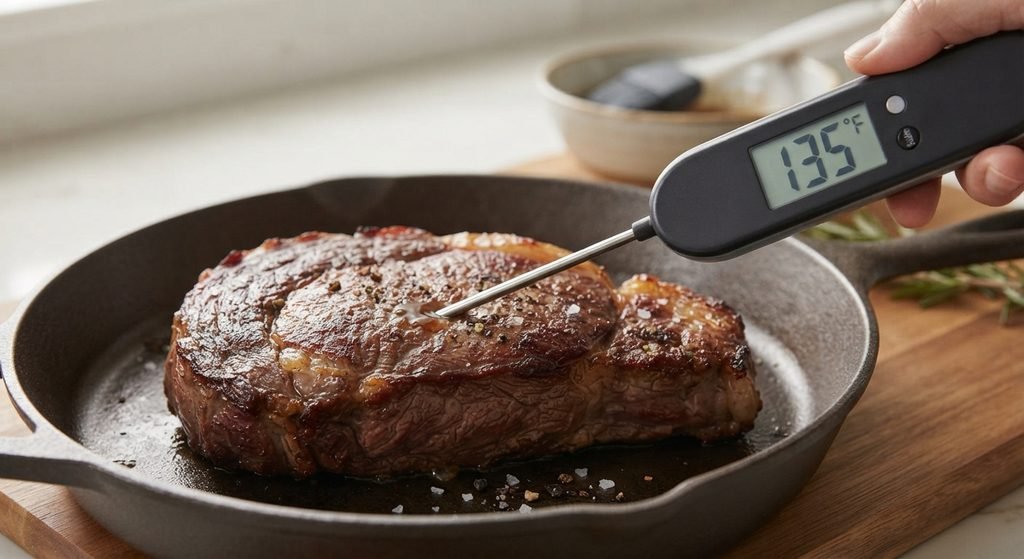
Instant-Read or Leave-In?
For most home cooks, an instant-read thermometer is the most versatile choice. It can quickly check the temperature of meat, poultry, fish, sauces, oil, and other foods.
Leave-in thermometers are designed to remain in food while it cooks. They can be useful for roasts or other dishes where monitoring the temperature during cooking is helpful.
If you want one thermometer for everyday cooking, an instant-read model is usually the simplest place to start.
Speed Matters
A thermometer that gives a reading quickly is easier to use while cooking. Fast readings are particularly useful when checking food in a hot skillet or oven because you can spend less time with the oven door open or your hands near heat.
Look for a model that is easy to read and produces a stable temperature reading without requiring a long wait.
Choose an Easy-to-Read Display
A clear digital display makes temperature checks much easier. Large numbers are especially useful when you’re cooking in a busy kitchen or checking food quickly.
Some thermometers also have illuminated displays, which can be convenient when working in a dimly lit kitchen.
Consider the Probe
The probe should be long enough to let you safely check food without putting your hand too close to a hot pan or oven.
A slim probe can also make smaller marks in delicate foods, while a stronger probe may be more suitable for larger cuts of meat and frequent use.
Think About Cleaning
Because the probe comes into direct contact with food, cleaning is an important part of choosing a thermometer.
Look for a design that allows the probe to be cleaned easily after each use. Some models have water-resistant construction, which can make everyday cleaning more convenient.
Accuracy Is More Important Than Extra Features
A thermometer does not need dozens of functions to be useful. The most important qualities are accurate readings, easy operation, a readable display, and a durable probe.
Bluetooth connectivity, multiple cooking presets, and other features can be useful, but they are not necessary for most everyday cooking.
What Type of Thermometer Should You Choose?
For general home cooking, an instant-read digital thermometer is a practical starting point.
If you regularly cook large roasts, a leave-in thermometer may be more useful. If you make candy or work with hot oil, look for a thermometer specifically designed for those applications.
The best choice depends less on how many features a thermometer has and more on how you actually cook.
Final Thoughts
A good kitchen thermometer takes much of the guesswork out of cooking. For most home kitchens, a reliable instant-read model offers the combination of speed, simplicity, and versatility needed for everyday use.