Soup has a special place in many cultures as a food associated with recovery. From chicken soup to vegetable broth, people have long turned to warm, simple meals when they are feeling unwell.
But why did soup become such a familiar part of caring for someone who is sick?
An Ancient Idea
Soup is not tied to one particular culture or period.
As soon as people learned to combine ingredients with water and heat, some form of broth or cooked liquid meal became possible. Cooking food in water also made tougher ingredients easier to eat and allowed nutrients and flavors to move into the liquid.
That practicality helped soups become part of everyday cooking in many parts of the world.
Over time, certain soups became associated not just with ordinary meals, but with care and recovery.
Why Warm Food Feels Comforting
One obvious reason is temperature.
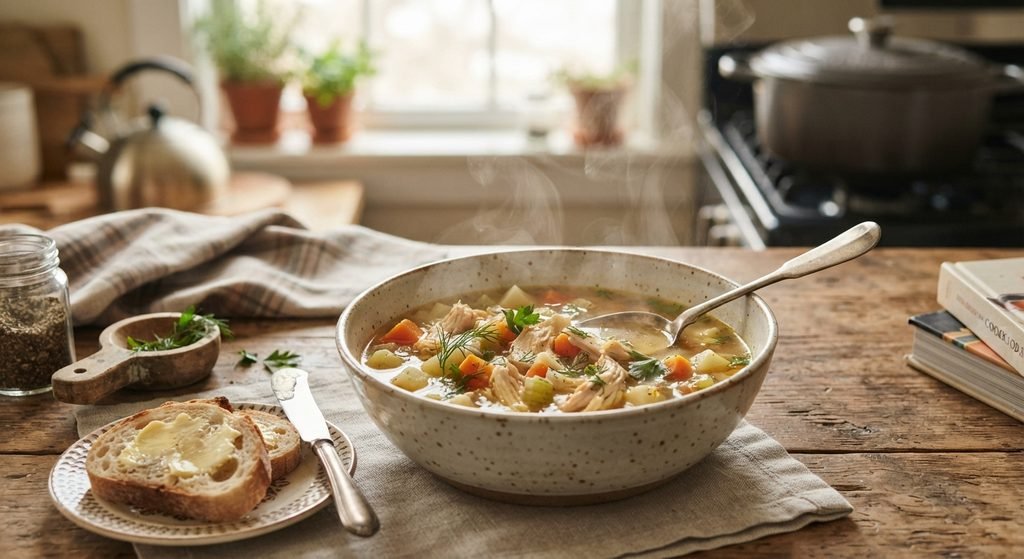
A warm bowl of soup can feel comforting when someone has little appetite or simply wants something gentle and familiar. The warmth can also make the experience of eating feel easier and more pleasant.
For someone who is tired, preparing and eating a complicated meal may feel like too much work. Soup is often soft, easy to consume, and can be served in a simple bowl without much effort.
Chicken Soup Became Especially Famous
Chicken soup has become one of the most recognizable examples of a food associated with illness.
Its reputation developed across generations and cultures, with different versions appearing in different culinary traditions.
In Jewish cuisine, chicken soup has a particularly long cultural history and is often associated with family meals, holidays, and care. Similar chicken-based broths and soups also became common comfort foods elsewhere.
The ingredients may change from one household to another, but the basic idea remains remarkably consistent: a warm, nourishing liquid meal prepared for someone who needs care.
Soup Is Also Practical
There is a practical reason soup works well when someone is not feeling their best.
It can combine liquid with ingredients such as vegetables, grains, noodles, legumes, or meat in a single dish.
It can also be prepared in a large pot and stored for later, making it convenient for families caring for someone who is resting.
This practicality helped reinforce soup’s role as a food associated with comfort.
Why Broth Became Important
Broth is particularly easy to consume.
When appetite is low, a rich solid meal may not sound appealing. A warm broth can provide fluid and flavor without requiring the same amount of chewing or preparation.
Different cultures developed their own versions, using whatever ingredients were locally available.
Rice, noodles, vegetables, herbs, beans, grains, meat, and seafood can all become part of a comforting soup.
The Emotional Side of Soup
There is another part of the story that has little to do with ingredients.
Soup is often connected to care.
Someone making soup for a sick family member is doing more than preparing food. The process can become an expression of attention, routine, and affection.
That emotional connection can make the food feel especially comforting.
A bowl of soup prepared by a parent, grandparent, partner, or friend can carry memories that go far beyond its flavor.
Does Soup Actually Cure a Cold?
Soup should not be confused with medicine.
Eating soup does not automatically cure an infection or replace appropriate medical care. However, depending on its ingredients, soup can be an accessible way to consume fluids and food when appetite is reduced.
Its comfort may also make it easier for someone to maintain a normal eating and drinking routine.
The cultural belief that soup represents recovery is therefore partly about practicality and partly about tradition.
Why the Tradition Continues
Modern kitchens offer countless convenient foods, yet soup has not lost its place as a comfort food.
Perhaps that is because it combines several things people naturally associate with being cared for: warmth, simplicity, familiar flavors, and something prepared specifically for the person eating it.
The recipe may change, but the idea remains remarkably old.
Final Thoughts
Soup became associated with illness not because there is one magical recipe, but because it is practical, comforting, adaptable, and deeply connected to family traditions around food.
Across generations and cultures, a warm bowl of soup has come to represent something larger than a meal: someone taking the time to care for you.