Choosing the right food storage containers can make a noticeable difference in how easily you organize leftovers, store ingredients, and keep your kitchen under control. The best option depends on what you usually store, how much space you have, and how you plan to use the containers.
Consider the Material
Food storage containers are commonly made from plastic, glass, or stainless steel. Each material has advantages.
Glass containers are useful for storing and reheating many foods and are less likely to retain strong odors. Plastic containers are lightweight and convenient for everyday storage, especially when portability matters. Stainless steel containers are durable and useful for certain storage needs, although they are generally not suitable for microwave use.
Choose the material based on how you actually use your containers rather than buying a large set simply because it contains more pieces.
Choose Practical Sizes
A useful container collection should include several sizes instead of many identical containers.
Small containers work well for sauces, chopped ingredients, and small portions. Medium containers are practical for leftovers and prepared ingredients, while larger containers are better for family-sized portions, salads, and bulk storage.
Having different sizes also helps reduce wasted refrigerator and cabinet space.
Pay Attention to the Lids
A good container is only as useful as its lid.
Look for lids that close securely and create a reliable seal. A poorly fitting lid can lead to spills, dried-out food, and unnecessary messes in the refrigerator.
If you regularly carry food to work or school, leak resistance should be one of your main priorities.
Think About Refrigerator and Cabinet Space
Before buying a large collection, consider where the containers will actually go.
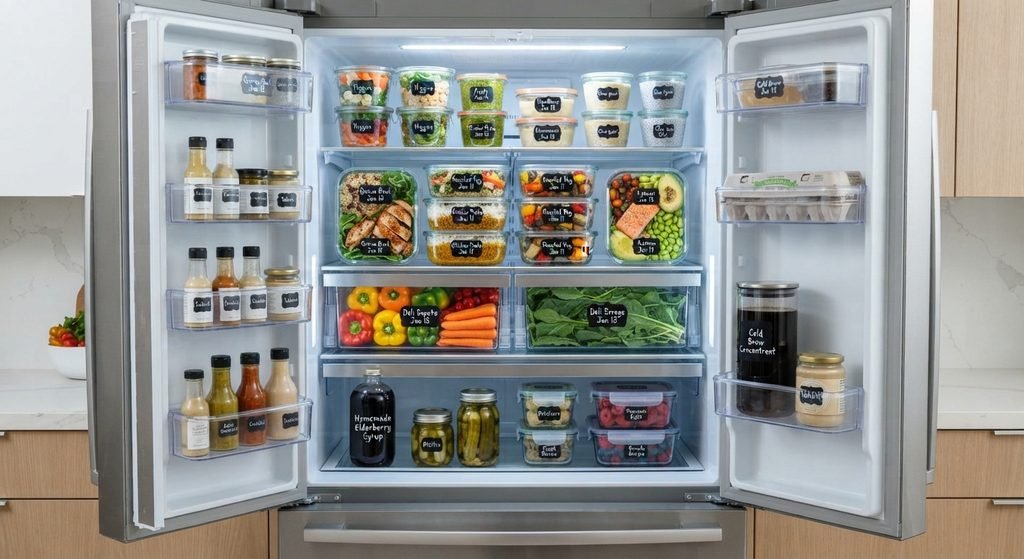
Stackable containers can make better use of refrigerator shelves and cabinets. Containers with similar shapes are also easier to organize because they can be nested or stacked without creating awkward gaps.
Square and rectangular containers often use available space more efficiently than round ones.
Check Cleaning Requirements
Containers that are difficult to clean tend to become less useful over time.
Look for designs with smooth interiors and removable parts when applicable. If you use a dishwasher, check whether the container and lid are designed for dishwasher cleaning.
Also consider whether the material tends to retain odors or stains from foods such as tomato sauce.
Consider Your Everyday Habits
The best food storage system is the one that fits your routine.
If you frequently prepare meals in advance, prioritize durable containers in several matching sizes. If you mostly store leftovers, a smaller collection of versatile containers may be enough.
For people who regularly freeze food, freezer compatibility is another important feature to check before buying.
Final Thoughts
The right food storage containers should be practical, durable, easy to clean, and suited to the way you use your kitchen. Instead of focusing on the largest set, choose a combination of sizes and materials that makes storing, organizing, and reheating food easier.