Washing raw chicken before cooking is a habit that has been passed down in many kitchens. The idea seems reasonable: if the chicken is rinsed, shouldn’t it be cleaner before it goes into the pan or oven?
The problem is that washing chicken does not work quite the way people expect.
So what actually happens when you rinse raw chicken?
The Test
Imagine two identical pieces of raw chicken.
- Chicken A: rinsed under running water
- Chicken B: placed directly on the cooking surface without rinsing
Both pieces are then cooked using the same method and brought to a safe internal temperature.
The important question is not which piece looks cleaner before cooking, but what happens to microorganisms during preparation and cooking.
What Does Washing Actually Remove?
Running water can remove some visible residue from the surface of chicken.
However, rinsing is not a reliable way to eliminate harmful bacteria that may be present on raw poultry.
Bacteria can remain on the chicken even after washing.
More importantly, water can spread tiny droplets from the raw chicken onto nearby surfaces.
Those droplets may reach the sink, countertop, utensils, cutting boards, or other foods.
This creates a different problem: contamination can spread beyond the chicken itself.
What Happens When You Rinse Chicken?
The water does not stay neatly on the chicken.
As it hits the surface, small droplets can splash or become airborne. Some of those droplets may contain microorganisms from the raw poultry.
The chicken may look freshly washed afterward, but the surrounding kitchen can now require additional cleaning.
So while washing may remove some surface material, it does not provide the food-safety benefit many people expect.
What Actually Makes Chicken Safe?
Cooking is the important step.
Raw chicken should be cooked thoroughly so that harmful microorganisms are destroyed by sufficient heat.
A food thermometer is useful because appearance alone is not always a reliable indicator of whether chicken has reached a safe internal temperature.
The goal is not to make raw chicken sterile before cooking.
The goal is to handle it carefully and cook it properly.
Does Washing Improve the Final Texture?
Not necessarily.
If the chicken is going to be roasted, grilled, or pan-seared, excess surface moisture can actually make browning more difficult.
A wet surface needs to lose that moisture before the chicken can brown effectively.
For better browning, patting the chicken dry with paper towels is generally more useful than rinsing it.
This is especially important when you want crisp skin.
What Should You Do Instead?
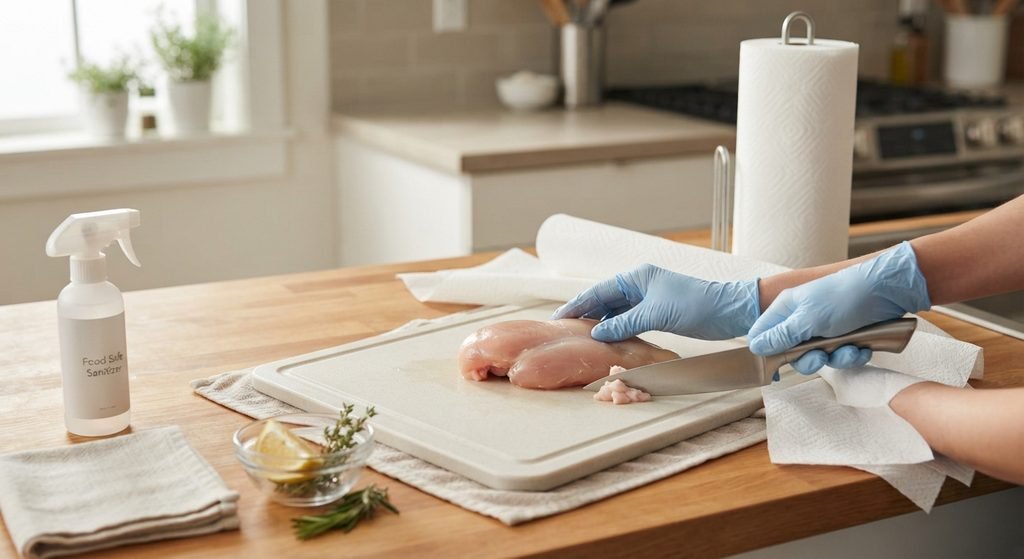
Keep raw chicken away from foods that will be eaten without cooking.
Use a clean cutting board and utensils, and wash your hands thoroughly after handling raw poultry.
Instead of rinsing the chicken, simply remove any unwanted surface moisture with disposable paper towels if needed.
Then cook the chicken properly.
After preparing raw poultry, clean the surfaces and utensils that came into contact with it.
These simple steps address the actual risks without creating unnecessary splashing.
Our Conclusion
Washing raw chicken does not make it meaningfully safer to eat.
It can remove some visible residue, but it does not reliably eliminate harmful bacteria and can spread contamination around the kitchen.
Proper handling, cleaning, and thorough cooking are much more important.
And when it comes to browning, starting with a dry surface can actually give you a better result.
Final Thoughts
Some kitchen habits survive because they seem logical.
Washing chicken is a good example.
The idea is understandable, but once you look at what happens to water, bacteria, and cooking temperatures, the better approach becomes clear: skip the rinse, handle the chicken carefully, and let proper cooking do the important work.