Adding salt to pasta water is one of the most common instructions in cooking. But does it actually make a noticeable difference, or is it simply a habit passed down from one cook to another?
The answer is simple: yes, salting the water matters, but the effect is mainly about seasoning the pasta rather than dramatically changing the way it cooks.
What Happens When Pasta Cooks in Salted Water?
Dry pasta absorbs water as it cooks.
If the cooking water contains salt, some of that salt becomes part of the pasta as it hydrates. This seasons the pasta from the inside rather than leaving all the seasoning to the sauce.
The difference can be subtle, but it becomes more noticeable when the pasta is served with a relatively simple sauce.
Can You Taste the Difference?
Yes.
Pasta cooked in unsalted water can taste noticeably bland even when it is covered with a flavorful sauce. Salted cooking water gives the pasta its own layer of seasoning.
The goal is not to make the water taste extremely salty. The idea is to add enough salt to season the pasta without overwhelming the finished dish.
Does Salt Prevent Pasta From Sticking?
This is a common belief, but salt is not the main solution to sticky pasta.
Pasta tends to stick when starch released during cooking causes pieces to cling together, especially when the pasta is left sitting without enough movement or moisture.
Stirring the pasta during the first few minutes of cooking is much more important for preventing pieces from sticking together.
Does Salt Make Water Boil Faster?
Technically, salt raises the boiling point of water.
However, the amount of salt normally used for cooking pasta has a very small effect on the boiling temperature. It does not meaningfully make pasta cook faster.
In a normal kitchen, adding salt should be thought of as a seasoning step rather than a way to speed up cooking.
Does Salt Change the Texture?
Salt can have an effect on the way food behaves during cooking, but the amount normally added to pasta water is not primarily intended to transform the texture of the pasta.
The biggest factors affecting texture are the type of pasta, the amount of water, the cooking time, and when the pasta is removed from the heat.
For a firm, pleasantly chewy texture, cooking time is much more important than salt.
When Does Salted Water Matter Most?
The difference is easiest to notice when pasta is paired with lighter sauces or simple ingredients.
If a pasta dish contains a strongly seasoned sauce, cheese, cured meat, or other intense flavors, the difference may be less obvious.
Even so, properly seasoned pasta gives the entire dish another layer of flavor.
Is More Salt Always Better?
No.
Adding excessive amounts of salt does not automatically produce better pasta. Once the pasta has absorbed enough seasoning, additional salt mainly makes the cooking water saltier.
The amount you use should also take into account how much salt will be present in the sauce and other ingredients.
The Simple Test
A straightforward kitchen experiment makes the difference easy to understand.
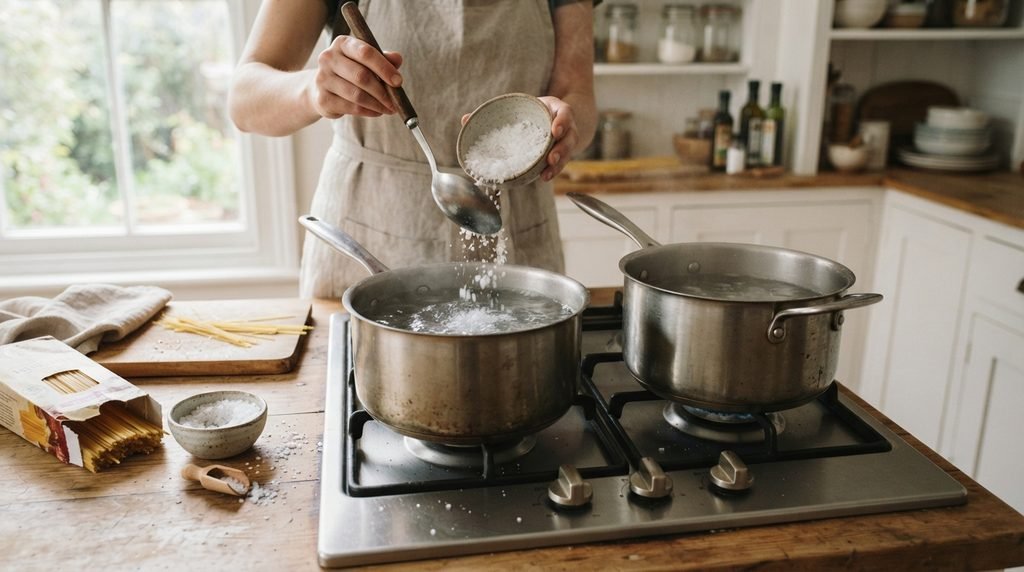
Cook two batches of the same pasta using the same cooking time. Add salt to one pot and leave the other unsalted.
Taste the pasta before adding any sauce.
The salted pasta should have a more developed flavor, while the unsalted pasta will usually taste noticeably flatter.
This is a small difference, but it is exactly the kind of difference that can improve the final dish.
Final Thoughts
Salting pasta water is not a magical cooking trick, and it does not dramatically change how quickly pasta cooks or prevent sticking on its own.
Its main purpose is much simpler: it seasons the pasta while it cooks.
The effect may seem small, but cooking is often about building flavor one small step at a time. Salted pasta water is one of those steps that is easy to overlook and easy to appreciate once you notice the difference.